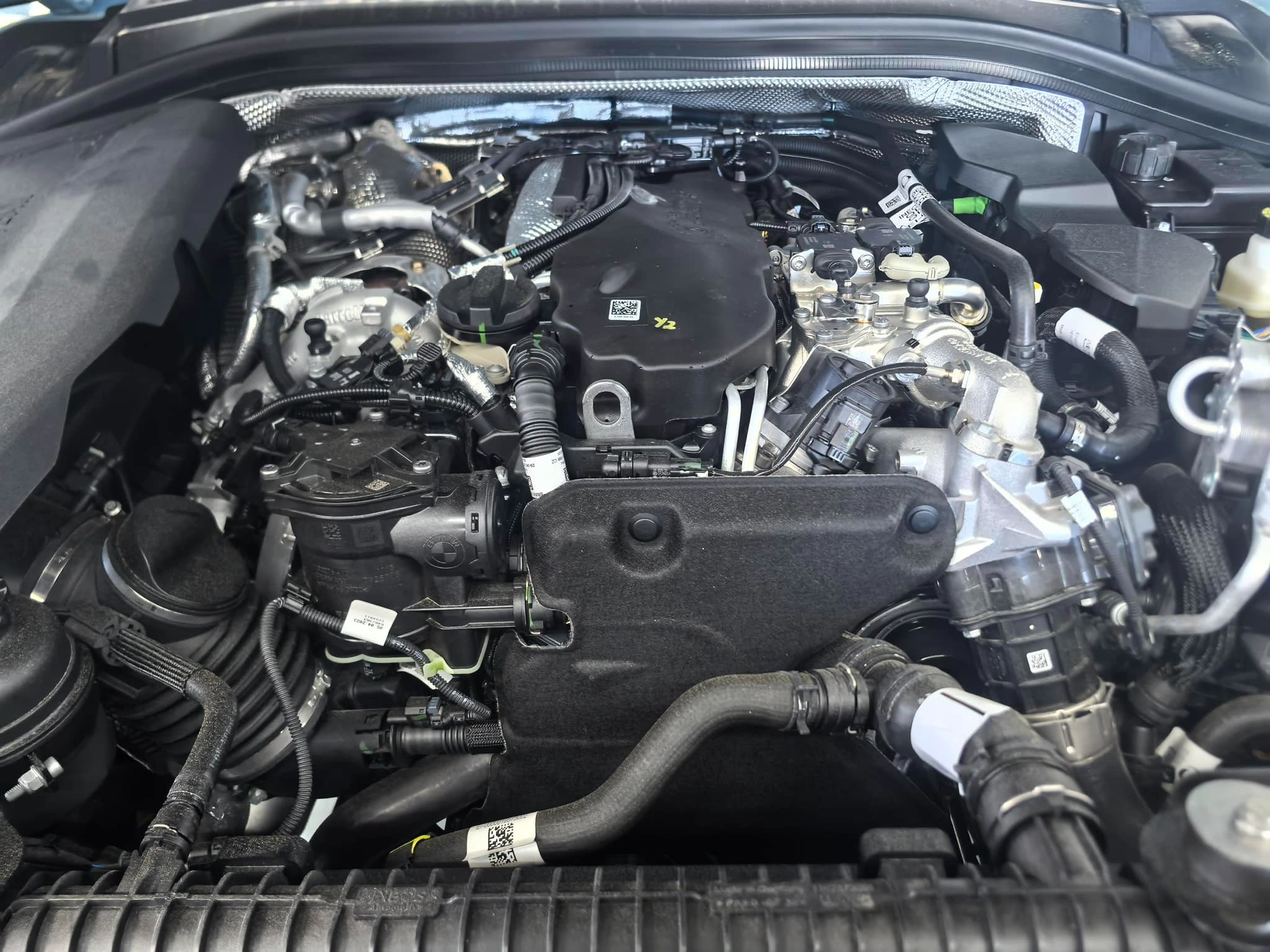
You bought the Ineos Grenadier because it is a capable, go-anywhere machine built for real terrain. The BMW B58 inline-six under the hood is one of the most refined turbocharged petrol engines ever put into a production 4×4. So when it starts running rough, surging at idle, or throwing a check engine light the moment you climb toward Rocky Mountain National Park or the Poudre Canyon, it catches you off guard. The frustrating part is that the truck may have driven perfectly at lower elevations. The altitude is not breaking your engine. It is exposing a condition your engine management system was not fully prepared to handle.
At A&B Import Auto, we specialize in European and import vehicle repair in Fort Collins, Colorado. Northern Colorado sits between 4,900 and 5,000 feet above sea level, and many of our customers regularly drive into the high country where elevations push well past 10,000 feet. We have diagnosed rough-running B58 engines on Grenadiers more than once, and the causes are consistent and fixable. This guide walks through exactly what is happening and what you can do about it.
Common Causes of a Rough-Running B58 Engine at High Altitude in Colorado
The B58 is a turbocharged engine, which gives it a natural advantage over naturally aspirated motors at elevation. The turbocharger compensates for thin air by compressing the intake charge before it enters the combustion chamber. That said, the system has limits, and the supporting components around it can create problems that altitude amplifies. Here are the most common culprits.
1. Dirty or Partially Clogged Fuel Injectors
The B58 uses high-pressure direct injection, and its injectors operate at extreme precision. At altitude, the engine’s ECU leans out the fuel mixture automatically to compensate for reduced oxygen. If your injectors are partially clogged or unevenly spraying, that already-leaned mixture becomes even less consistent across cylinders. The result is a rough idle, a stumble under throttle, and sometimes a misfire code. Grenadier owners who spend time in the mountains or do a lot of low-speed off-road crawling are especially prone to carbon buildup on the injector tips. A professional fuel system service can clean or replace the injectors and restore even fuel delivery across all six cylinders.
2. Intake Valve Carbon Buildup
Direct injection engines like the B58 do not wash the intake valves with fuel the way port-injected engines do. Over time, oil vapor from the crankcase ventilation system coats the back of the intake valves with carbon deposits. At sea level this might cause a subtle roughness you could almost ignore. At 9,000 feet, where the engine is already working harder to build the right air-fuel ratio, those carbon-caked valves restrict airflow just enough to tip the balance. The engine stumbles, hesitates on acceleration, and may run unevenly at idle. Walnut blasting or professional intake cleaning is the correct fix, and it makes a noticeable difference at any elevation.
3. Failing or Stuck Blow-Off Valve / Diverter Valve
The B58 uses a diverter valve to recirculate pressurized intake air back into the turbo inlet when you lift off the throttle. If this valve sticks open or leaks, boost pressure escapes at the wrong time and the engine sees an unmetered air-fuel imbalance. At lower altitudes, the ECU can often compensate without a noticeable symptom. At higher elevations, where boost thresholds are already being pushed closer to their limits, a failing diverter valve can cause a pronounced surge, a flutter under load, or a rough transition between throttle positions. This is a relatively inexpensive part that is easy to overlook until altitude makes it impossible to ignore.
4. Spark Plug Degradation
The B58 runs on a high compression ratio, and its spark plugs take a beating over time. Worn or fouled plugs produce a weaker spark, which matters less when there is plenty of dense sea-level air in the cylinder to ignite. At altitude, the combustion event is already working with a compressed but thinner charge, and a weak spark can cause incomplete combustion, misfires, and rough running. BMW and Ineos recommend spark plug replacement intervals that many owners stretch too far. If your Grenadier has high mileage or has not had its plugs checked recently, a tune-up service with fresh plugs is one of the fastest ways to improve cold-altitude performance.
5. Mass Airflow Sensor Drift or Contamination
The mass airflow sensor tells the ECU exactly how much air is entering the engine, and the ECU uses that reading to calculate the proper fuel delivery. At high altitude, air density drops significantly, and the MAF sensor needs to be reading accurately for the engine to adapt correctly. A dirty or drifting MAF sensor sends inaccurate data, and the ECU applies the wrong fuel correction on top of an already-challenging altitude adjustment. The engine runs rough, hunts at idle, or bogs under load. Cleaning the MAF with proper solvent is a low-cost first step, but a sensor that is genuinely out of calibration will need to be replaced.
6. Boost Pressure and Wastegate Issues
The B58’s turbocharger system includes a wastegate that regulates how much exhaust gas drives the turbine. If the wastegate actuator is sticking or the boost control solenoid is malfunctioning, the engine may overbuild or underbuild boost pressure. At sea level, a small overbuild might just feel like extra punch. At 10,000 feet, where the turbo is spinning faster and longer to compensate for thin air, a wastegate that does not open at the right time can cause boost spikes, knock, and rough running. A proper boost leak test and actuator inspection are part of any thorough high-altitude engine diagnosis.
What to Do When Your Grenadier Runs Rough at Elevation
A rough-running B58 is not a reason to panic, but it is a reason to act promptly. Ignoring the symptoms can allow a small issue to snowball into something more expensive. Here is how to approach the problem intelligently.
1. Note the Exact Symptoms and Elevation
Before you call a shop, write down the details. Does it happen only above a certain elevation? Only at idle, or also under load? Did a check engine light come on? If so, get the code read even at a parts store. Specific information like these details helps a technician narrow the diagnosis quickly rather than spending time ruling out problems that do not apply.
2. Do Not Clear the Codes and Hope It Goes Away
It is tempting to clear a check engine light and see if it returns. On a B58 at altitude, that often just resets the learning tables and masks the pattern that would have helped a technician identify the root cause on the first visit. Leave the codes intact and bring the vehicle in for a proper
Leave the codes intact and bring the vehicle in for a proper engine diagnostic where a technician can read freeze frame data and live sensor values. That information paints a much clearer picture than a cleared code ever could.
3. Check Your Maintenance History
When did you last change the spark plugs? Has the fuel system ever been serviced? Is the engine oil correct for the B58 and fresh enough? These questions matter more at altitude than they do at sea level. The B58 calls for a full synthetic 0W-30 or 5W-30 that meets BMW Longlife specs, and using the wrong viscosity or running extended drain intervals in Colorado’s extreme temperature swings can compound altitude-related issues. Staying current on factory-scheduled maintenance is the best thing you can do to keep your Grenadier happy in the mountains.
4. Have a Shop That Knows the B58 Do a Targeted Diagnosis
The B58 is a complex engine with sophisticated variable valve timing, twin-scroll turbocharging, and a high-pressure fuel system. A generic scan tool and a guess is not going to cut it. You want a shop that understands BMW powertrain engineering and has experience diagnosing turbocharged import vehicles. That means reading live data, performing a boost leak test, checking MAF sensor output against known good values, and inspecting the intake tract for oil residue or carbon. Throwing parts at a rough-running B58 without a proper diagnosis wastes money and time.
5. Consider an Altitude-Specific Inspection Before a Big Mountain Trip
If you plan to drive your Grenadier into the high country, a pre-trip vehicle inspection is a smart investment. Fort Collins is a perfect basecamp for northern Colorado adventures, but the roads to Cameron Pass, Trail Ridge, and Rollins Pass climb fast and stay high. An inspection that checks the fuel system, ignition components, air intake, and turbo system can catch a developing problem before it turns into a breakdown at 11,000 feet with no cell service.
Trust A&B Import Auto for Ineos Grenadier Repair in Fort Collins
A rough-running B58 at altitude is a solvable problem when the diagnosis is done correctly. The engine is excellent, and it is designed to handle elevation with the right turbo compensation, but it relies on clean injectors, accurate sensors, fresh spark plugs, and a healthy boost system to do its job well. Neglecting any one of those components becomes a bigger issue the moment you gain elevation, because the margin for error shrinks as the air thins out.
Schedule your vehicle inspection with us today!